Engineering trust through digital presence

Redesigning a welding equipment e-commerce platform to serve 800+ resellers across two distinct audiences

Weld Vision — welding equipment e-commerce platform

Client

Weld Vision

My Role

  • UX Strategy
  • E-commerce
  • End-to-End
  • B2B
  • UI
  • System Thinking

Timeline

2022

Team

  • 1 Product Designer
  • 2 Software Engineers
  • 1 Product Manager
Context

Weld Vision sells welding and cutting equipment through 800+ resellers across Brazil. But behind the commercial success, the digital operation was fragmented — different websites for different product lines, an outdated e-commerce platform, and no shared experience.

Sales teams worked around the system. Customers got lost between disconnected journeys. A B2B buyer looking for a quote could end up in a B2C checkout. A reseller searching for consumables couldn't find compatible products.

The challenge: unify B2B complexity with B2C speed in a single, scalable platform.

The Problem

The fragmentation showed up at every touchpoint. Marketing couldn't drive organic traffic because the SEO foundation barely existed. Product information was inconsistent. And the same platform was supposed to serve a factory manager negotiating a $50K machine and a small shop owner buying consumables in minutes.

Fragmented platforms. 800+ resellers scattered across disconnected websites with no unified digital experience.

Low SEO performance. Poor URL structure, missing meta tags, and no content strategy made organic discovery nearly impossible.

Conflicting needs. B2B clients needed quotations and technical manuals. B2C customers wanted fast purchases and simple checkout.

Core tension
How do you unify B2B complexity with B2C speed in a single platform — without compromising either experience?
Discovery & Research

I spent the first weeks talking to both sides of the business. B2B sales teams walked me through quotation cycles that took days. B2C customers showed how fast they abandoned when specs were unclear. Stakeholders from marketing, sales, and operations each had a different picture of the problem.

We mapped what we knew, what we assumed, and what we still had to prove — then benchmarked industrial leaders like Dell, Lincoln Electric, and ESAB to find gaps in the market.

Certainties

B2B buyers need technical detail, quotation flows, and after-sales support. SEO and content structure drive organic discoverability.

Assumptions

B2C customers prioritize speed and simplicity. Cross-selling consumables could increase average order value.

Doubts

Could a single platform truly serve both audiences without creating a confusing hybrid experience?

B2B buyers sought quotations, technical manuals, and longer negotiation cycles — while B2C customers wanted fast product search, simple navigation, and quick checkout.
Stakeholder & user interviews
Pain Point Mapping

The research surfaced the same friction across the journey — from search to post-purchase. Each step had a B2B pain, a B2C pain, or both. These became the design implications we couldn't ignore.

Flow StepPain / FrictionUser ImpactDesign Implication
Product search No intelligent filters; consumables buried under equipment High abandonment on search results Category-aware filters with consumable cross-sell
Product detail One template for all products; specs inconsistent B2B buyers can't compare; B2C overwhelmed 4 category-specific templates with tailored hierarchy
Quotation No B2B quote flow; forced through B2C checkout Lost B2B deals; manual workarounds Dedicated quote request with negotiation history
Checkout Complex multi-step; no saved preferences Cart abandonment; repeat friction Streamlined 3-step checkout with saved profiles
Post-purchase No order tracking; manual support requests Support overload; low retention Self-service portal with order history and re-order
Jobs To Be Done

To keep the design grounded in real behavior, we framed needs as jobs to be done. Two patterns kept appearing: restocking consumables quickly, and requesting quotes without project delays.

When I...
search for welding consumables for my shop
I want to...
find compatible products quickly with clear specs and pricing
So that...
I can restock efficiently without calling sales support
When I...
need a quote for industrial equipment
I want to...
submit a request with my specs and get a response within 24h
So that...
I can plan procurement without project delays
Hypotheses

With the pains clear, we turned each friction point into a testable hypothesis. Each one connected a design decision to an expected business outcome — so we could prioritize what mattered most.

Pain / FrictionHypothesis of SolutionExpected Impact
No intelligent filters for consumables Category-aware search with cross-sell engine +30% consumable conversion rate
One-size-fits-all product pages 4 templates tailored by product category Reduced bounce rate; higher B2B engagement
No B2B quotation flow Dedicated quote request with negotiation history Faster B2B sales cycle; less manual work
Poor SEO structure SEO-first IA with clean URLs and structured data Organic traffic growth; marketplace readiness
Benchmarking

We audited four competitors to understand what the market was getting right and where it was leaving room for Weld Vision. The pattern was consistent: strong technical content often came with poor UX, and fast UX often lacked the depth B2B buyers needed.

Dell
Strengths
  • Configurable product pages
  • Clear B2B/B2C separation
Weaknesses
  • Complex navigation for non-tech users
Insight
  • Category-specific templates improve conversion
Lincoln Electric
Strengths
  • Strong technical content
  • Distributor network integration
Weaknesses
  • Outdated visual design
  • Weak mobile experience
Insight
  • Technical content drives B2B trust
ESAB
Strengths
  • Global brand presence
  • Product comparison tool
Weaknesses
  • No localized B2B flow for Brazil
Insight
  • Comparison tools increase engagement time
Magnum / Magma
Strengths
  • Simple product catalog
  • Fast page loads
Weaknesses
  • No e-commerce; brochure-only
  • Weak SEO
Insight
  • Speed + content = competitive advantage
Key Decisions

Every direction had a counter-direction. These three decisions defined what the platform would become — and what it deliberately refused to be.

DecisionRejectedChosenWhy
Platform structure Two separate sites Single site, dual paths One codebase, shared SEO authority, consistent brand across audiences
Product pages One-size-fits-all template 4 category-specific templates Equipment, consumables, torches, and CNC each need different information hierarchies
SEO approach Bolt SEO onto existing structure SEO-first information architecture Clean URLs, proper heading hierarchy, and structured data from day one
The business wanted two separate sites for clarity. The design chose unity — one platform with audience-specific paths, shared SEO authority, and consistent brand identity.
Information Architecture

With the decisions made, we rebuilt the information architecture from the problems up. Each area of the original IA had a clear objective in the new structure — audience-aware navigation, tailored product pages, dual checkout, and SEO from day one.

AreaProblem in Original IANew IA Objective
Navigation Flat category structure; no audience-aware paths Audience-specific entry points with smart mega-menu
Product pages Single template; specs inconsistent across categories 4 category templates with tailored content hierarchy
Search Basic text search; no filters for consumables Category-aware filters with compatibility matching
Checkout Same flow for B2B and B2C; no quote option Dual checkout: B2C quick buy + B2B quote request
SEO Dynamic URLs; missing meta; no structured data Clean URLs, proper headings, schema.org from day one
User Flows

The same product page became the starting point for two very different journeys. B2C buyers moved toward purchase; B2B buyers moved toward quotation, negotiation, and long-term support.

B2C Consumer Flow
Browse catalog
Category filters, search, cross-sell suggestions
Product detail
Simplified specs, price, reviews, "Add to cart"
Cart
Consumable suggestions, quantity, saved items
Checkout
3-step: address → payment → confirmation
Post-purchase
Order tracking, re-order, support
B2B Professional Flow
Technical catalog
Specs, compatibility charts, manuals
Product detail
Full specs, PDF manual, "Request quote"
Quote request
Quantity, specs, negotiation history
Negotiation
Sales team responds within 24h with pricing
Order & support
Bulk order, invoicing, dedicated support
Trade-offs

Balancing two audiences on one platform meant constant trade-offs. Three constraints shaped the design more than any feature request.

Legacy constraints
The existing admin panel had severe limitations. Any new design had to be implementable within the constraints of the current CMS — or the client would need to invest in a new backend entirely.
Stakeholder alignment
Aligning B2B sales team requirements with B2C marketing goals required multiple workshops and trade-off discussions. Every feature had two audiences requesting opposite things.
Mobile complexity
B2B product pages are information-dense — specs, compatibility charts, quotation forms. Condensing this for mobile without losing essential detail was a constant design challenge.
The Solution

The final design was a complete, functional e-commerce platform — not a set of isolated screens. It unified B2B and B2C journeys across a single codebase: audience-aware navigation, category-specific product templates, dual checkout flows, quotation negotiation, post-purchase self-service, and an SEO-first architecture.

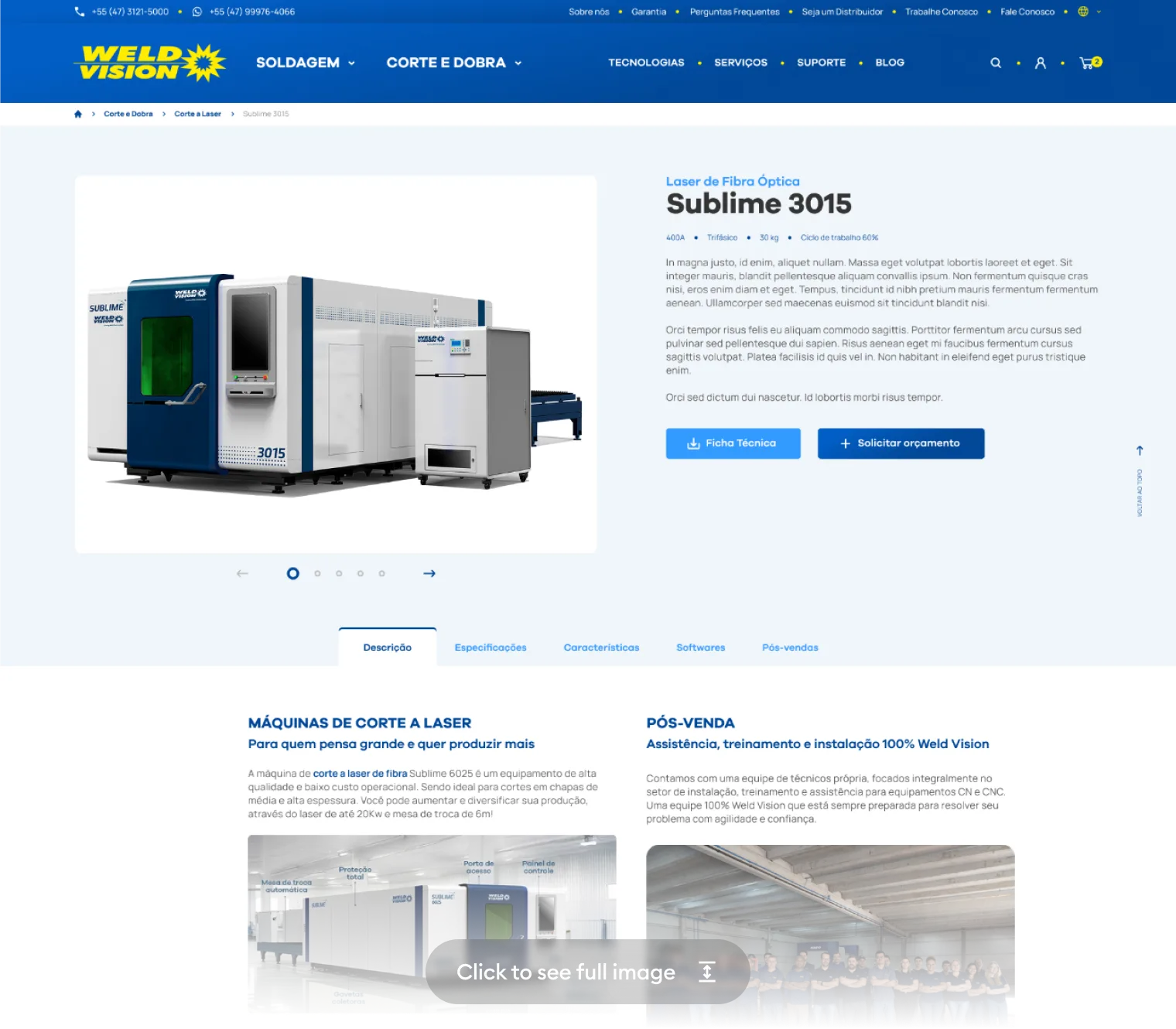
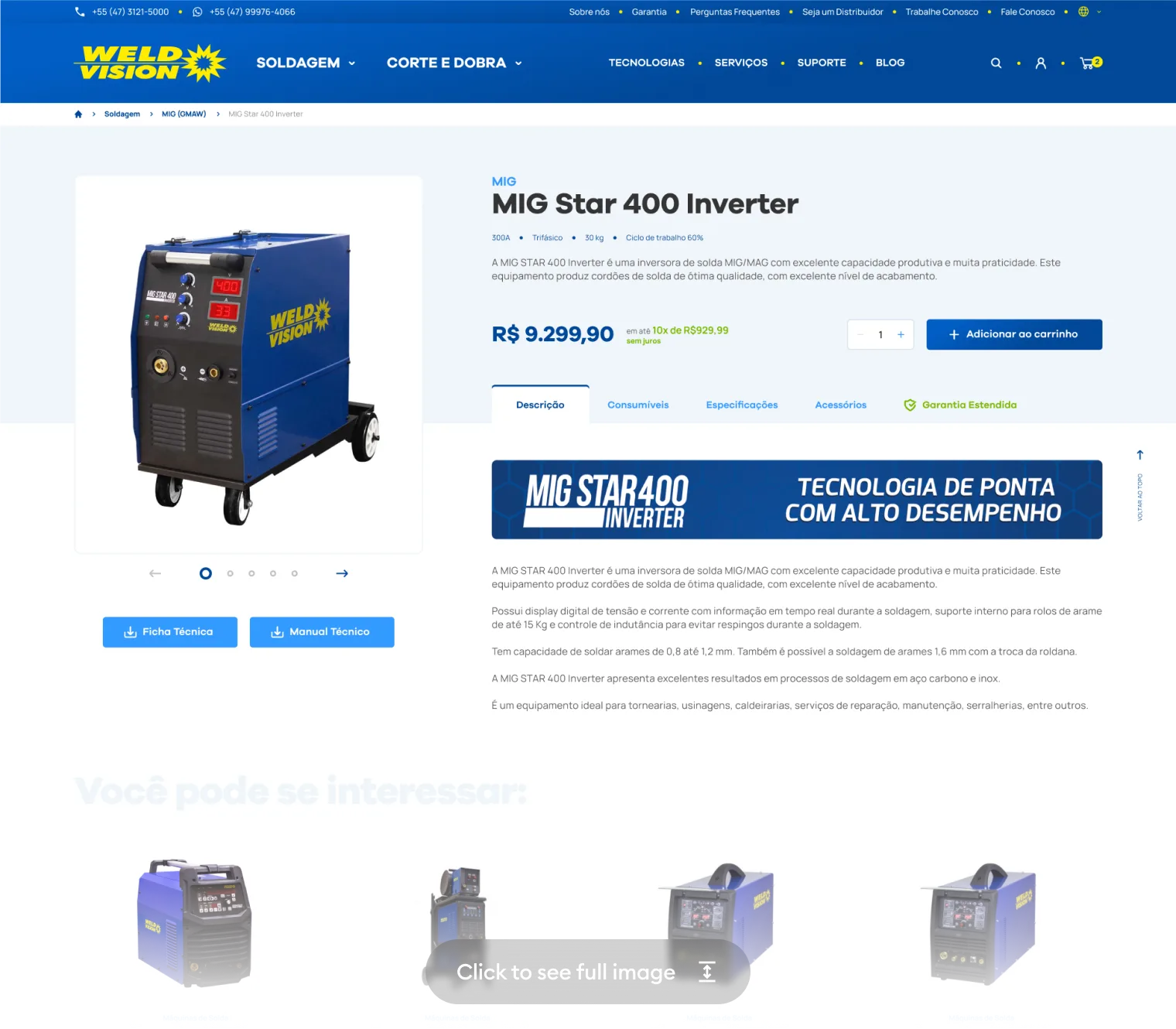
Four product page templates — equipment, consumables, torches, and CNC machines — each prioritized the most relevant specs and actions for their category. B2B users landed on a quotation-ready catalog; B2C users got a streamlined shopping experience. Both paths shared the same backend, design system, and content structure.
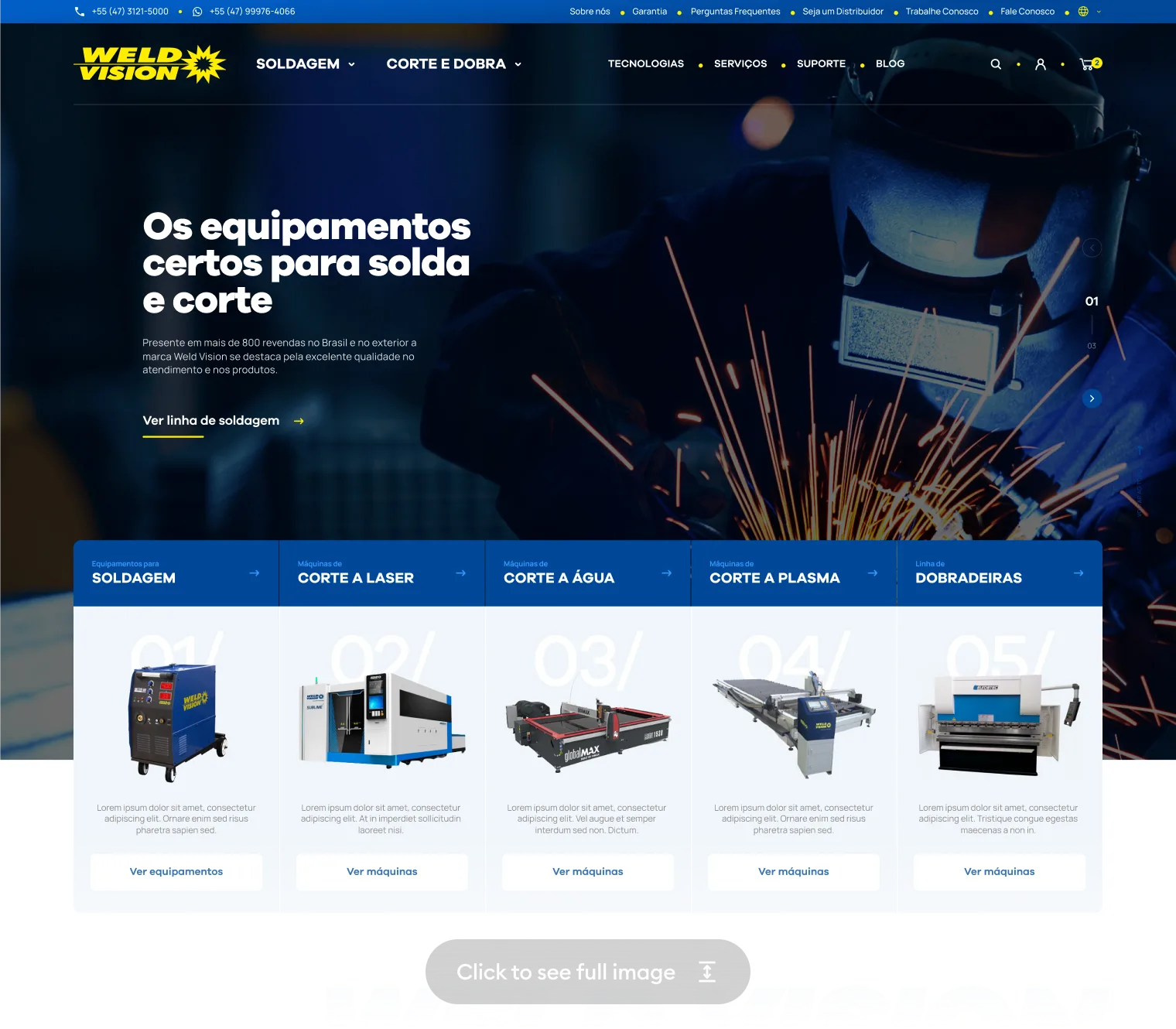
Home page — product catalog with audience-specific entry points
Home page — product catalog with audience-specific entry points for both B2B and B2C.
Category listing — structured for both B2B and B2C browsing
Category listing — structured for both B2B and B2C browsing.
Product detail — information-dense with clear hierarchy
Product detail — information-dense with clear hierarchy.
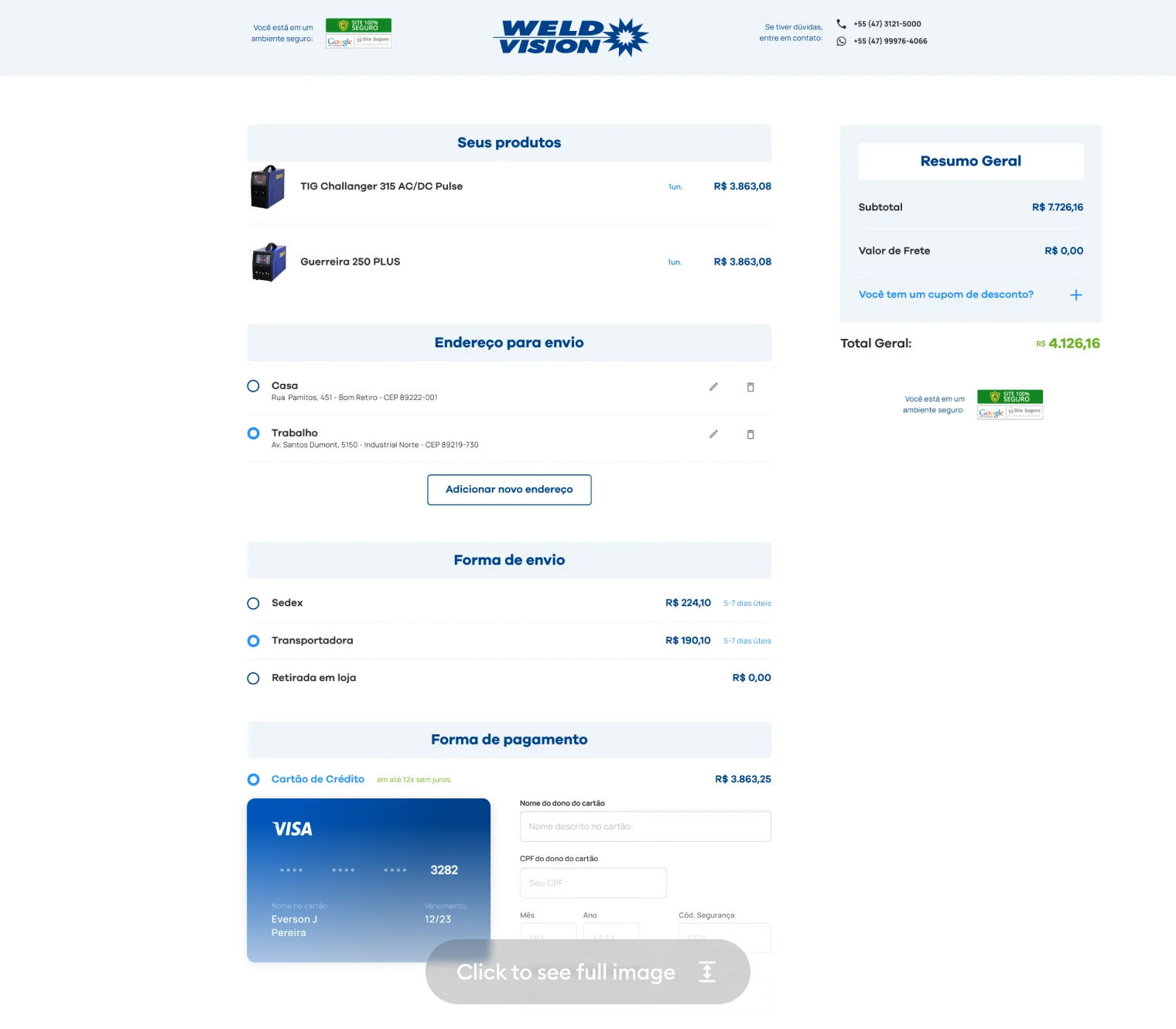
Checkout — credit card payment flow
Checkout — credit card payment flow.
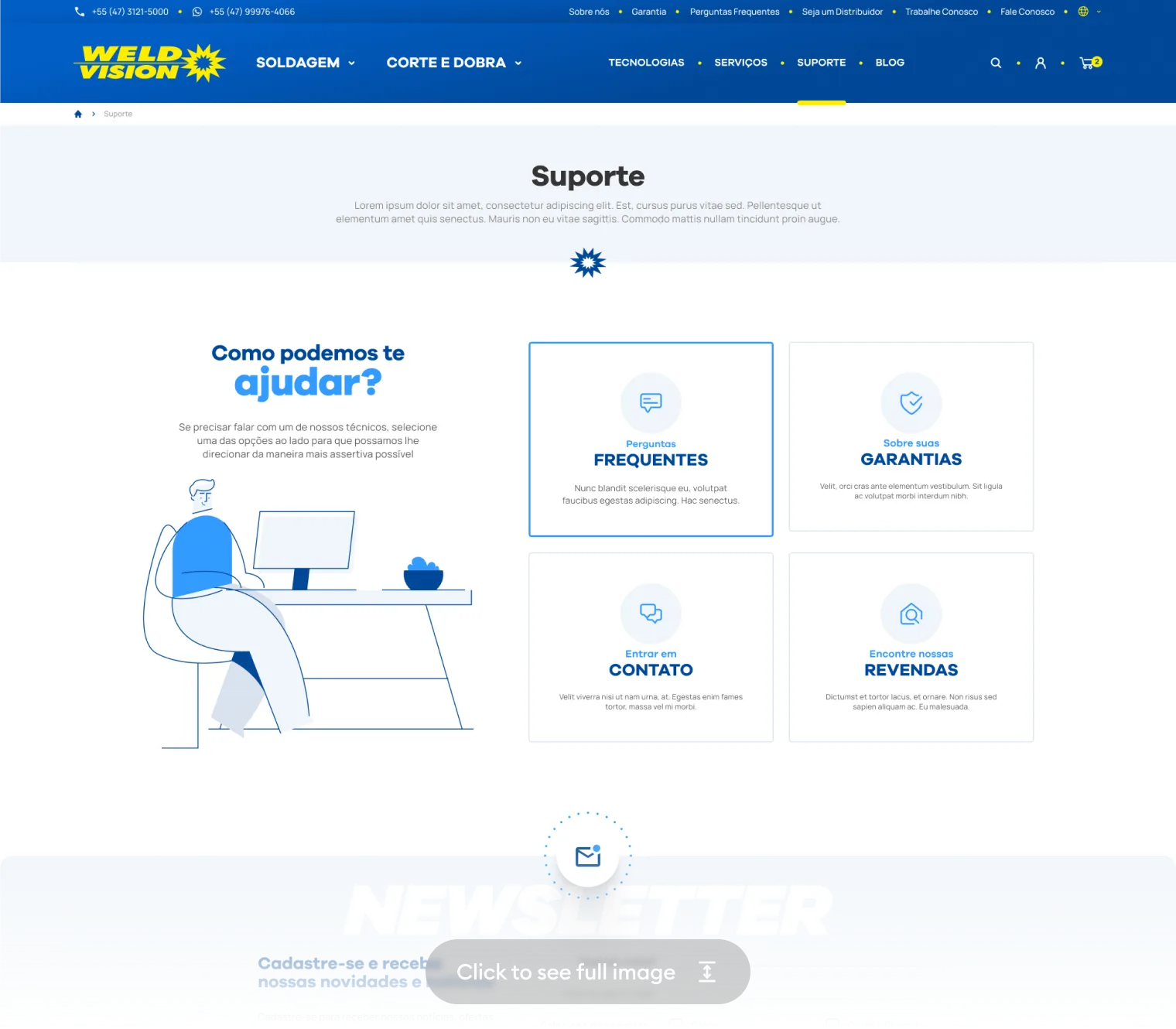
Support — self-service portal with order history and re-order
Support — self-service portal with order history and re-order.
Key Deliverables
Unified e-commerce platform — B2B and B2C journeys on a single codebase
Audience-aware navigation — smart mega-menu with dual entry points
Product experience system — 4 category-specific templates, search, filters, comparison
Dual checkout architecture — B2C quick buy + B2B quote negotiation
Self-service portal — order tracking, re-order, invoices, dedicated support
SEO-first foundation — clean URLs, structured data, content architecture
Impact
Product discoverability
Navigation complexity
1
Unified platform replacing multiple fragmented sites
Reflection

Looking back, I would have pushed harder for a headless CMS from the start. The legacy admin panel constraints shaped many design decisions — not always in the user's favor. A more modern backend would have unlocked richer product experiences and faster iteration cycles.

The biggest lesson was learning to say "both" instead of "either/or." B2B and B2C don't have to be separate experiences — they need thoughtful information architecture that surfaces the right content for the right context.